DevSecOps & Code Hardening
A manufacturing firm's internal machine-status app, hardened with a static-analysis quality gate.
Fictionalised summary. Company names, the contact email and repository addresses are placeholders; no credential or token values are shown.
Domain & SKU
What this example orders, at a glance.
- Domain
- DevSecOps & Code Hardening
- Deliverable
- Static Analysis & SAST Integration
- Turnaround
- Standard (48 hours)
- Environments in scope
- Linux VM
- Compliance
- None apply
02
Current State
Baseline architecture, stack, repository context and known friction.
Architecture & system context
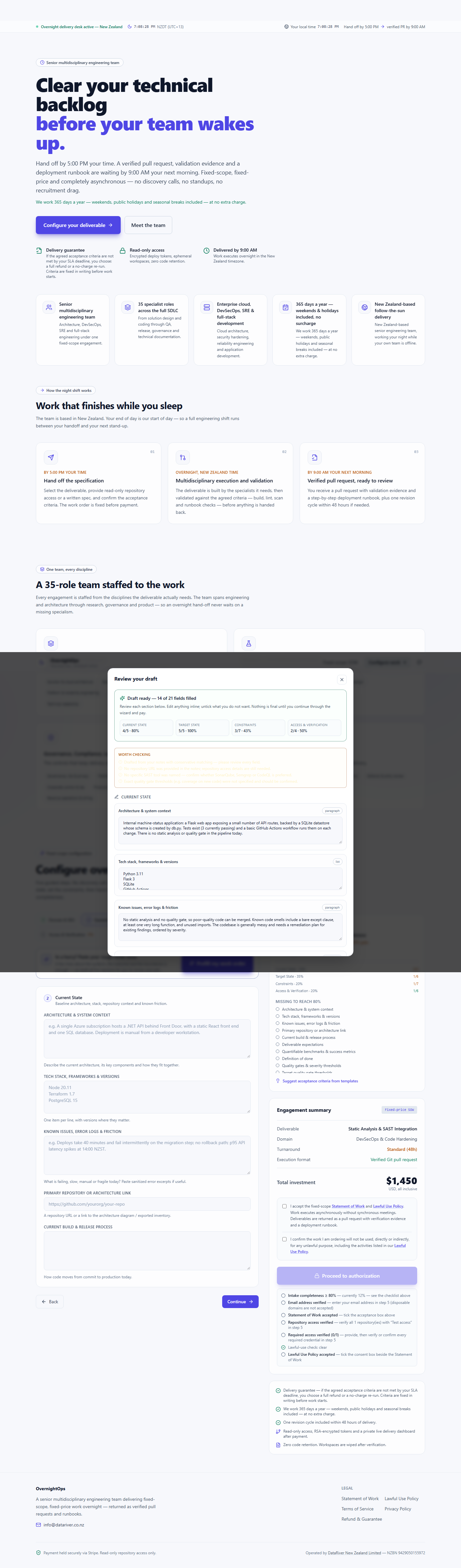
Our internal machine-status app is a Flask service with a handful of API routes and a SQLite store shaped by db.py. It renders a status board for the shop floor and runs on a single internal Linux VM behind our network. Tests exist but there is no static analysis anywhere.
Tech stack, frameworks & versions
- Python 3.11
- Flask 3.0
- SQLite
- pytest
- GitHub Actions (test workflow only)
Known issues, error logs & friction
The existing workflow only runs the test suite. There is no static analysis, so code-quality problems build up and we only find them during review. We do not have a consistent gate that blocks a pull request when quality drops.
Primary repository or architecture link
https://github.com/your-org/your-repoCurrent build & release process
A GitHub Actions workflow runs pytest on pull requests. There is no build artifact step and no analysis step; merges happen once a reviewer is satisfied.
03
Target State
Deliverable expectations, measurable benchmarks and definition of done.
Deliverable expectations
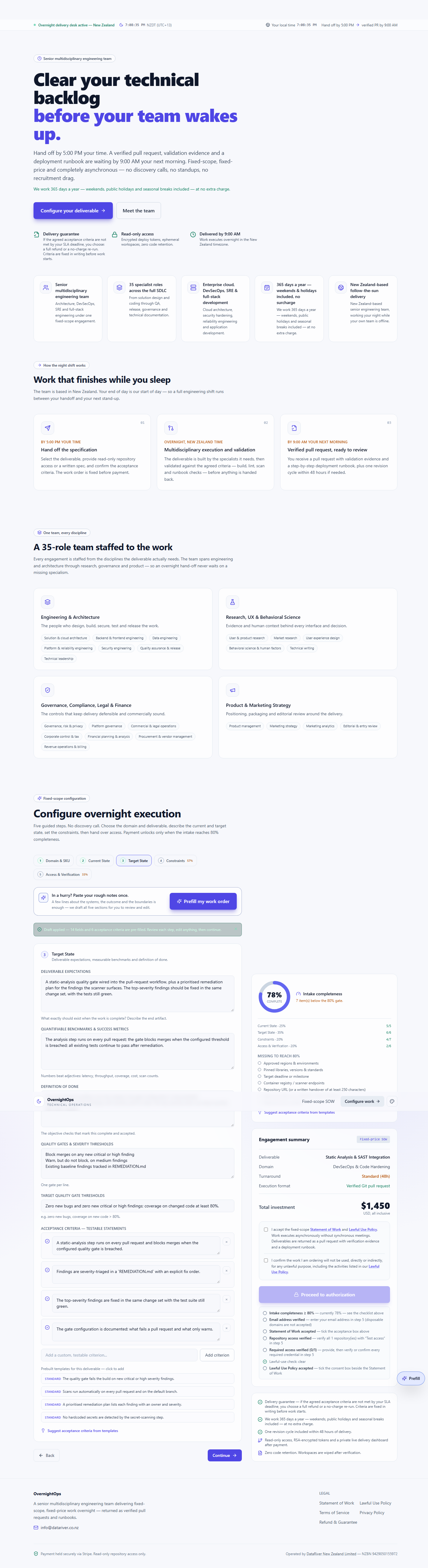
A static-analysis quality gate wired into the pull-request workflow, plus a prioritised remediation plan for the findings the scanner surfaces. The top-severity findings should be fixed in the same change set, with the tests still green.
Quantifiable benchmarks & success metrics
The analysis step runs on every pull request; the gate blocks merges when the configured threshold is breached; all existing tests continue to pass after remediation.
Definition of done
The pull-request workflow runs the analysis, the gate configuration is documented, REMEDIATION.md lists findings with severity and fix order, the top-severity items are fixed, and the test suite is green.
Quality gates & severity thresholds
- Block merges on any new critical or high finding
- Warn, but do not block, on medium findings
- Existing baseline findings tracked in REMEDIATION.md
Target quality gate thresholds
Zero new bugs and zero new critical or high findings; coverage on changed code at least 80%.
04
Constraints
Forbidden changes, compliance, regions, freeze windows and deadlines.
Forbidden modifications & boundaries
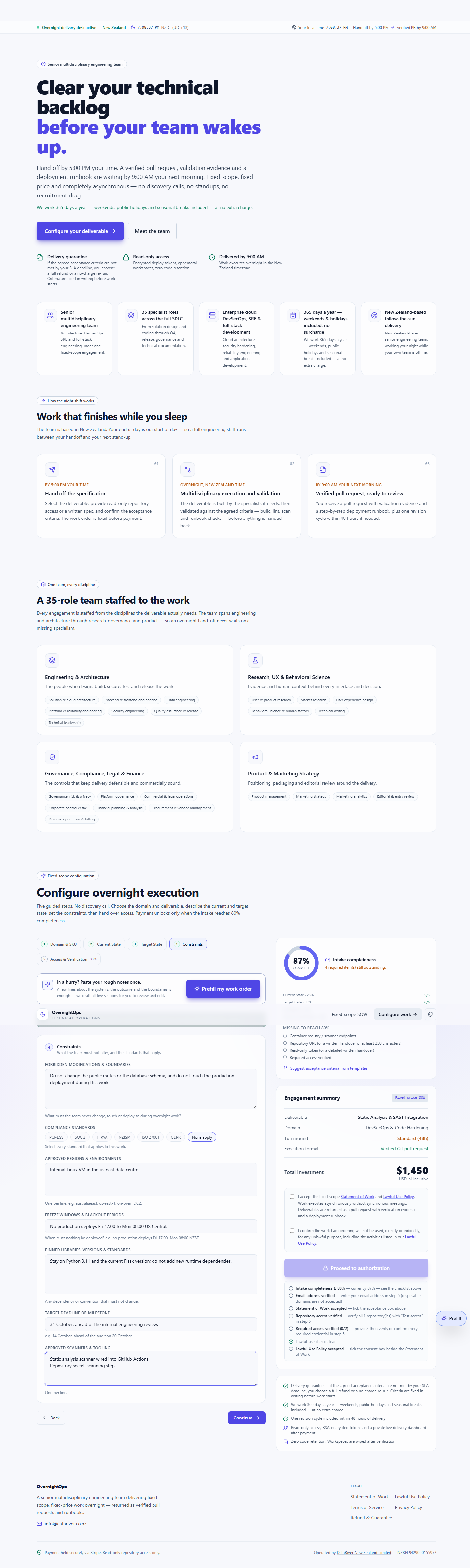
Do not change the public routes or the database schema, and do not touch the production deployment during this work.
Compliance standards
- None apply
Approved regions & environments
- Internal Linux VM in the us-east data centre
Freeze windows & blackout periods
No production deploys Fri 17:00 to Mon 08:00 US Central.
Pinned libraries, versions & standards
Stay on Python 3.11 and the current Flask version; do not add new runtime dependencies.
Target deadline or milestone
31 October, ahead of the internal engineering review.
Approved scanners & tooling
- Static analysis scanner wired into GitHub Actions
- Repository secret-scanning step
05
Access & Verification
Repository access, read-only credentials, environments and verification.
Handover method
Repository access
Git repository URL
https://github.com/your-org/your-repoRead-only repository token
Encrypted in your browser before it leaves the device.
Environments in scope
- Linux VM
Container registry / scanner endpoints
No container registry in scope; analysis runs in the CI runner.
Contact email
Acceptance criteria as captured
These are the testable statements fixed before payment. Delivery is checked against this list.
- A static-analysis step runs on every pull request and blocks merges when the configured quality gate is breached.
- Findings are severity-triaged in a `REMEDIATION.md` with an explicit fix order.
- The top-severity findings are fixed in the same change set with the test suite still green.
- The gate configuration is documented: what fails a pull request and what only warns.
From the live intake
Captured screenshots of this work order being filled in. Each image is scrollable — scroll inside a frame to see the full page.
What happens after payment
Payment confirms the fixed scope. From there the work runs to the SLA you selected and every step is visible on your private dashboard.
The SLA clock starts
Your turnaround countdown begins the moment payment is confirmed — under 14 hours overnight, or 48 hours standard. Early delivery is always the goal.
A private dashboard
Your tracking link opens a private work-order dashboard showing the five delivery stages and every update as the work progresses.
Verified delivery
The deliverable is returned as a verified pull request or documented package, checked against the acceptance criteria you agreed before payment.
Your downloads
The final report, the acceptance-criteria results and every file in the delivery package are available on the dashboard until you close it.